Every nonprofit should be able to answer, from its own data, the questions that matter most about its work: what happened, who showed up, and what changed. MissionAligned exists to close the gap between doing the work and being able to see it — so operational clarity stops being a luxury of large organizations and becomes ordinary practice for every mission-driven team. We measure our impact the way we ask partners to: by the number of operational questions that move from unanswerable to answered.
Someone at your organization is going to spend a week rebuilding the year
Someone at your organization is going to spend a week rebuilding the year
from memory and a folder of photos nobody labeled. A report is due.
The proof was there. It was just scattered.
MissionAligned keeps it in one place. Your 990 and budget fill the workspace
on day one. Instagram and LinkedIn posts come in on their own, source attached.
Then you reuse it. Grant narrative, board packet, annual report. Same library,
every claim traceable back.
Closed beta opens early September. First fifty get a lifetime membership.
missionaligned.net
3.4M items in 2019. 6.3M by 2024.
Operation Warm almost doubled their lifetime output across five filings. The 2019 990 reported 3.4 million coats since inception. By 2024 the cumulative number was 6.3 million, the catalog had grown to include shoes and sports bras, and annual clothing spend had climbed from $31M (2021) to $57M (2024). Volunteer count parked around 41,000 the whole way through, which means the growth came from supply-side scaling, not from putting more bodies in the field.
I'd guess the partner-agency network is doing more of the work than the new product lines, but the 990s don't break it out cleanly. Curious what other folks see in there.
Operation Warm Inc, Form 990, Parts I & IX, tax years 2019–2024
#ScalingImpact #NonprofitOps #Form990
Cedarburg Landmark Preservation Society: 98% of revenue from renting out the very buildings they preserve.
Cedarburg Landmark Preservation Society: 98% of revenue from renting out the very buildings they preserve.
Cedarburg Landmark Preservation Society (Cedarburg, WI) reports $317,425 in total revenue. Historic-building rental: $310,544 — 98% of the operation. Their preservation work is funded almost entirely by renting out the buildings they preserve. The asset pays for itself.
Different sector, same template: Central Vermont Memorial Civic Center (Montpelier, VT) reports $307,647 in revenue, $295,163 (96%) from facility rental. Mission: an athletic and cultural facility for Vermont residents.
The model flips the asset on the balance sheet. The building isn't a cost center waiting on grants. It's the product.
If your nonprofit owns a physical space that sits empty when you're not using it, that empty time is unmonetized revenue. Historic homes, community centers, athletic facilities, and even sanctuaries fit this template.
Cedarburg Landmark Preservation Society and Central Vermont Memorial Civic Center Form 990s, Part VIII.
#EarnedRevenue #NonprofitFinance #NonprofitOps #Form990
One niche journal funds 77% of a $250K nonprofit. The model scales to a $3M oceanography society on the same template.
Association of Clinical Scientists (Houston, TX) reports $252,209 in total revenue. Journal revenue: $193,148 — 77%. Contributions are just 11%. Mission: promote education and research in clinical science.
Same template at 10x scale: the Association for the Sciences of Limnology and Oceanography (Washington, DC) reports $2.94M in revenue, with $631,798 (22%) from journal sales and subscriptions, plus more from membership.
The mechanics: niche academic or professional groups publish their field's flagship journal. Institutional libraries subscribe. Members pay for access. The journal is simultaneously the field's intellectual record and the org's revenue model.
If your nonprofit runs a working group that already produces written output — research, white papers, technical standards — the journal model may be one short editorial board away.
Association of Clinical Scientists and Association for the Sciences of Limnology and Oceanography Form 990s, Part VIII.
#EarnedRevenue #NonprofitFinance #Programs #Form990
A Michigan school for gifted learners named its entire teaching method after the founder's father
A Michigan school for gifted learners named its entire teaching method after the founder's father
Found this in Steppingstone Center's most recent 990, Plymouth, Michigan. The school serves gifted learners K-8 — a population that often gets lost in age-based grade assignment, since cognitive development and physical/social maturity rarely line up.
What caught me: their entire pedagogical method has a name and a person attached to it. They call it the Akaba Model of Differentiated Education, named after the founder's father, Kenji Akaba. The method has "evolved over years of teaching gifted learners at Steppingstone," in the school's own words. It's built to flex with each student rather than march them forward by age.
Most schools quietly run on a generic philosophy. Steppingstone formally credits a single person — the founder's dad — every time they describe what they do. That's a different kind of institutional memory.
If you run a small mission-driven school or training org, this is worth thinking about: is the way you teach distinctive enough to name? And whose intellectual lineage built it? Naming methods after the people who actually shaped them is an act of remembrance that's easy to skip.
What teaching or program model does your org run that deserves a name?
Steppingstone Center, Form 990, Schedule O Part III description, tax year 2023
#GiftedEducation #Nonprofit990 #Pedagogy
75% of revenue here. 77% there. Both nonprofits fund themselves on one annual conference.
Newborn Brain Society (Boston, MA) reports $423,941 in total revenue. Conference registration alone: $316,479 — 75% of revenue. Mission: advance newborn brain care through collaboration and education.
Illinois Reading Council (Normal, IL) reports $513,434 total, with $395,707 (77%) from conference fees. Mission: support literacy education. Contributions are only 14%.
For membership orgs with subject-matter expertise, the math works almost identically. Registration fees + sponsorships + exhibitor booths fund the year. Members already want to be in the same room — the conference is just the structured forum where that happens.
The professional, academic, and trade-discipline nonprofits I've reviewed all converge on this model. If your members would already meet without you, your conference is leaving sponsorship money on the table.
Newborn Brain Society and Illinois Reading Council Form 990s, Part VIII (program service revenue and contributions).
#NonprofitFinance #EarnedRevenue #Programs #Form990
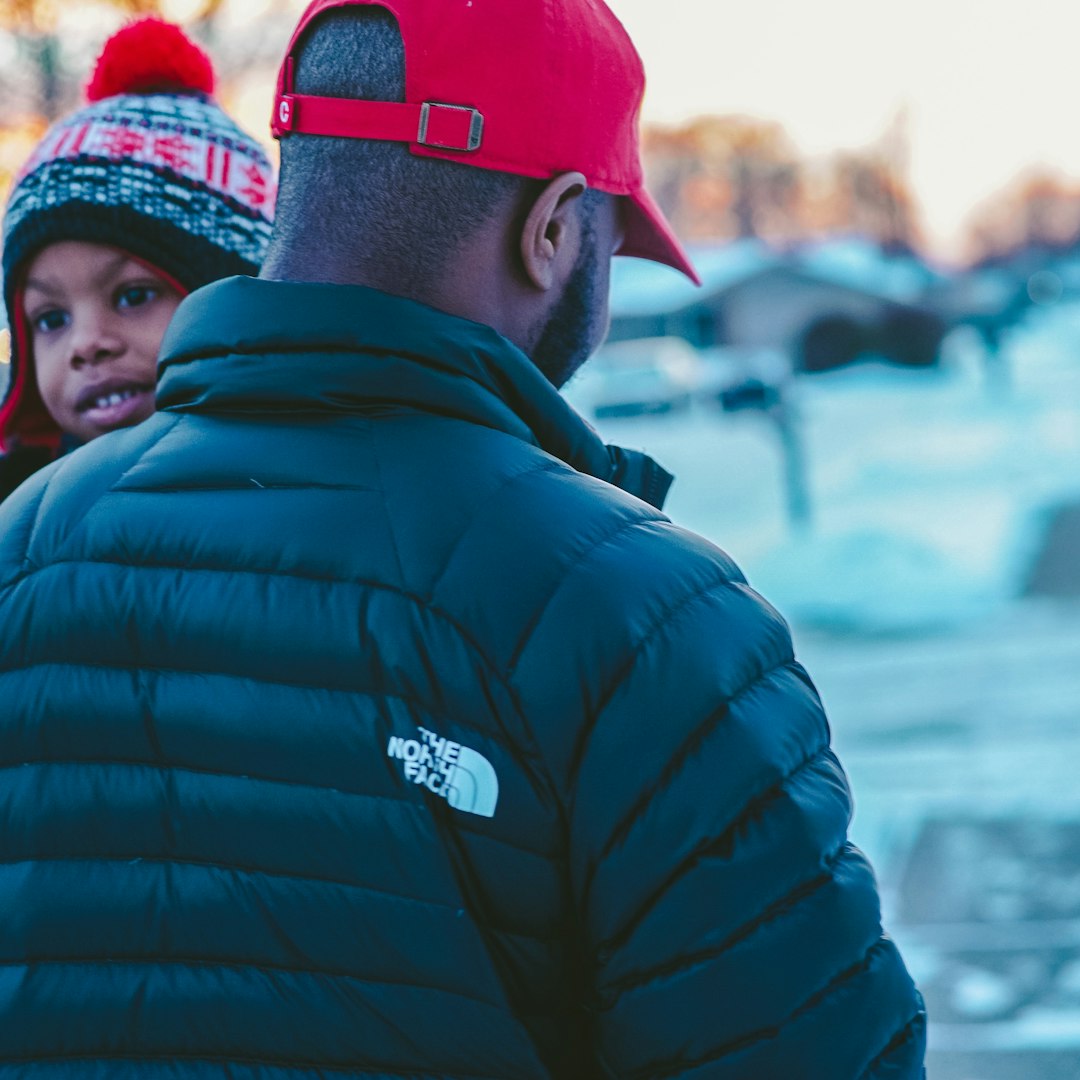
$57M a year in clothing. The coat isn't really the product.
Operation Warm has used the same sentence in their 990s since at least 2021: the coat is a "catalyst for connection." Local partners use the gift to start a relationship with a family, and that relationship is what their filing calls "the springboard" to other resources. Most of the strategic work happens after the coat is handed over, which is the kind of thing that's easy to miss when a 990 reports $57M of clothing as a single line.
Anyone else running a gift-as-catalyst model? Curious what the follow-through actually looks like in practice once the gift is delivered.
Operation Warm Inc, Form 990, Part III, Line 4a, tax years 2021–2024
#TheoryOfChange #SystemsChange #Nonprofit990
One thrift shop, $1M in revenue. Same playbook running 51% to 88% of revenue at three different scales.
Matthews Help Center (Matthews, NC) pulls in $2,044,517 in total revenue. The thrift shop alone brings in $1,050,308 — 51% of revenue. Donations cover most of the rest (44%). Mission: short-term crisis assistance for the greater Matthews community.
Drop down a tier: We Care Community Services in Dayton, TN runs $1,194,716 total, with $844,228 (71%) from thrift. Contributions are just 4%. Mission: serve economically disadvantaged residents of Rhea County.
Drop down again: Macon Helps in Lafayette, TN runs $356,833 total, with $312,322 (88%) from thrift sales. Mission: help families in need.
Same model, three sizes — from $300K to $2M. Donated inventory costs nothing to acquire. Retail margin funds the mission. Contributions become the supplement, not the foundation.
If your mission is community crisis assistance, what's stopping you from running a thrift shop? Donated goods + retail margin + community foot traffic is one of the most reliably scalable nonprofit revenue models on the 990.
Matthews Help Center, We Care Community Services, and Macon Helps Form 990s, Part VIII (program service revenue and contributions).
#NonprofitFinance #EarnedRevenue #Form990 #ScalingImpact #Fundraising
A trucking trade association funds women's business scholarships in memory of its former president
A trucking trade association funds women's business scholarships in memory of its former president
Found this in Express Carriers Association's most recent 990, Carlsbad, California. ECA is a trade group for light-and-medium freight carriers — not a sector you'd guess would be doing gender-equity scholarships.
But here's what they did: they routed money to the Greater Milwaukee Community Foundation to establish a scholarship fund in memory of Carrie Ehlers, former president of the Express Carriers Association. The fund supports female college students pursuing a degree in business. That's straight from the 990.
A few things stand out. First, trucking and logistics are heavily male-dominated industries — the trade association explicitly chose to memorialize their former president by helping more women enter the broader business world, not just the trucking world. Second, they didn't try to administer the scholarship themselves. They handed the endowment to a community foundation that already does this well. That's a smaller-org move other trade associations can copy.
You don't need a development department to set up a named legacy fund. You need a community foundation partner and a clear honoree.
What's the smallest gesture your org could make that would still outlive your tenure?
Express Carriers Association Inc, Form 990, grant disclosure (Greater Milwaukee Community Foundation, Carrie Ehlers scholarship fund), tax year 2023
#Nonprofit990 #LegacyGiving #WomenInBusiness
Holiday Lake 4-H: 73% from camper lodging. 21% from donations.
$795,823 from camper lodging and food. That's 73% of Holiday Lake 4-H Educational Center's revenue last year, against 21% from donations. The camp pays the bills.
Vermont Elks Charities in Williamstown, VT, does the same thing for a different mission. 43% of their $544,322 comes from camp fees. They serve people with disabilities; donations cover scholarships for families who can't afford to pay.
Different missions, same funding shape. The donation chase is the supplement, not the spine.
Anyone else funding their org through facilities operations rather than donations? Curious where else this model shows up.
Holiday Lake 4-H Educational Center, Form 990 Part VIII; Vermont Elks Charities, Form 990 Part VIII
#Nonprofit990 #EarnedRevenue #NonprofitFunding
Coats in 2019. Shoes by 2021. Sports bras by 2023.
If you read Operation Warm's 990s in order and only look at the catalog, you can watch them decide, year by year, which kid they couldn't afford to leave out. 2019: coats only. By 2021 shoes were in. Sports bras showed up two filings later, which is a specific kid being named in the line items: a teen girl who'd otherwise pull herself out of gym class.
Whose catalog tells you who they refused to leave out?
Operation Warm Inc, Form 990, Part III, tax years 2019–2024
#BasicNeeds #ChildPoverty #Nonprofit990
Cambridge Center for Adult Education: $1.9M from course fees.
Cambridge Center for Adult Education: $1.9M from course fees. 74% of revenue. Donations smooth the rest.
Cambridge Center for Adult Education (Cambridge, MA) reports $2,600,455 in total revenue. Course fees: $1,919,943 — 74%. Contributions: 20%. Mission: affordable, high-quality classes for curious adults. They sell classes; donations smooth the rest.
Different field, same shape: BoardBuild / Board Development Systems (Fort Worth, TX) reports $267,973 in revenue, of which $114,550 (43%) comes from training fees. Mission: train and match nonprofit board members. The training content IS the mission AND the revenue line.
The model is portable: identify what your staff already knows that an employer or a learner would pay for, package it into a curriculum, charge for access. Mission-aligned and self-funding in the same motion.
The cleanest version of this template happens when the curriculum and the mission are the same thing — like BoardBuild. Training isn't a sideline; it's the program.
Cambridge Center for Adult Education and BoardBuild / Board Development Systems Form 990s, Part VIII (program service revenue and contributions).
#EarnedRevenue #NonprofitFinance #Programs #Form990 #ScalingImpact
A Massachusetts nonprofit ran on $395K and 12,500 volunteers last year, with zero paid staff.
A Massachusetts nonprofit ran on $395K and 12,500 volunteers last year, with zero paid staff. Most of those volunteers are children.
Found this in their 2023 Form 990. Gifts to Give, in Acushnet, MA, brought in $394,907 last year, all of it from contributions, and spent $0 on fundraising. Paid employees: zero. Volunteers: 12,500.
Families drop off gently-used clothes, toys, books, and other things they no longer need. Kids do the sorting and packing at the org's "repurposing factory." Local agencies serving homeless or in-need children order the finished bundles.
What got me about this is that children serve children here, with the adults mostly out of the way. The 990 calls it "tangible philanthropy and big citizenship." I'd just call it the program.
The 12,500-volunteer count almost certainly includes every child who passed through the factory on a school trip, not weekly regulars. The $0 fundraising line probably means those costs are buried in program services. But the shape of the org is real, and it's not common.
Anyone come across other nonprofits where the beneficiaries are also the labor force? Curious if this is a category I'm missing.
Gifts to Give Inc, Form 990, Tax Year 2023, IRS filing 202520229349301137_public.xml
#Nonprofit990 #VolunteerLeverage #YouthService
1,600 members. $1,000+ each. That's a $1.6M recurring floor with no infrastructure beyond a name and a recognition ritual.
Direct from the American Battlefield Trust's Schedule O:
"The Trust also has a major donor society, as a subset of its overall membership, called the Color Bearers, comprised of those members who make membership payments of $1,000 or more annually. Total membership in this group was approximately 1,600 members at the end of the fiscal year."
That's a $1.6M+ annual revenue floor from a single named tier. Layered on top is a planned-giving recognition program (the "Honor Guard") for legacy gifts.
No thrift shop. No facility. No event production. The whole thing runs on a CRM, a brand, and a recognition ritual donors want to be part of.
Most nonprofit boards underestimate how much a named giving tier reframes the giving conversation. Naming a tier converts a one-time donor into a member who self-identifies with the org. That self-identification compounds.
American Battlefield Trust Form 990, Schedule O (narrative on the Color Bearers giving society and Honor Guard planned-giving program).
#Fundraising #NonprofitFinance #Form990 #Governance
A walk-a-thon brings in 32% of a $3.8M nonprofit's revenue.
A walk-a-thon brings in 32% of a $3.8M nonprofit's revenue. A 5K covers 61% of a $320K one. Same model.
Angelman Syndrome Foundation (Aurora, IL) reports $3,863,609 in total revenue. Their walk-a-thon: $1,248,266 — 32% of the operation. Contributions add another ~53%, so the walk and the giving program feed each other.
Different scale, same template: Atlanta HBCU Alumni Alliance pulls $319,604 in revenue, with $194,094 (61%) from the HBCU Run Walk. Mission: scholarships for HBCU students.
The mechanics are the same at both ends. Participants raise sponsor pledges. Sponsors pay for visibility. The race day itself becomes a community ritual that builds a donor list. The donor list seeds next year's race.
Not every nonprofit needs an endurance event. But for orgs without a thrift shop, no facility to rent, and no journal to sell, an annual race may be the cheapest revenue line you can build from scratch.
Angelman Syndrome Foundation and Atlanta HBCU Alumni Alliance Form 990s, Part VIII (program service revenue and contributions).
#Fundraising #NonprofitFinance #Form990 #ScalingImpact
PA, MD, NJ, TX. Four states in three filing years.
In 2021 Operation Warm started retaining government-affairs firms to lobby state legislatures: Compass Government Relations in Maryland, CLB Partners in New Jersey, then Frontera Strategy in Texas the following year. Schedule C states the goal directly: "secure funding through appropriation bills during the State budgeting process to directly supply coats and shoes for children in local communities." That's a different funding model from grants and individual giving, and the 990s show them building it deliberately, year over year.
Anyone here run a state line-item advocacy program? Especially curious how you handle the multi-year timing, since state appropriations don't follow a fundraising calendar.
Operation Warm Inc, Form 990, Schedule C, Part IV, tax years 2021–2023
#NonprofitAdvocacy #StatePolicy #FundingDiversification